Cairo and Giza: History, Culture, and Archaeology Explained
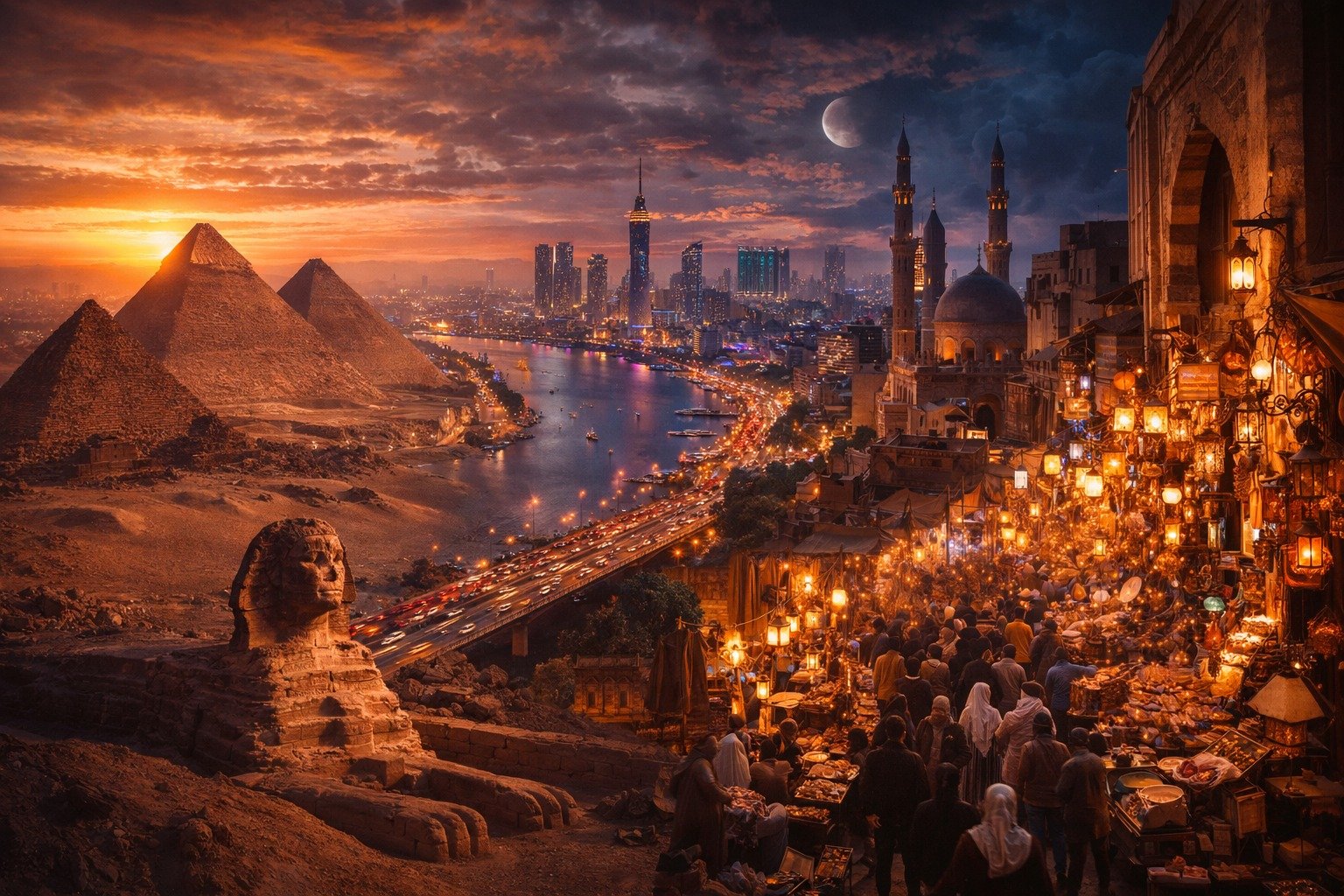
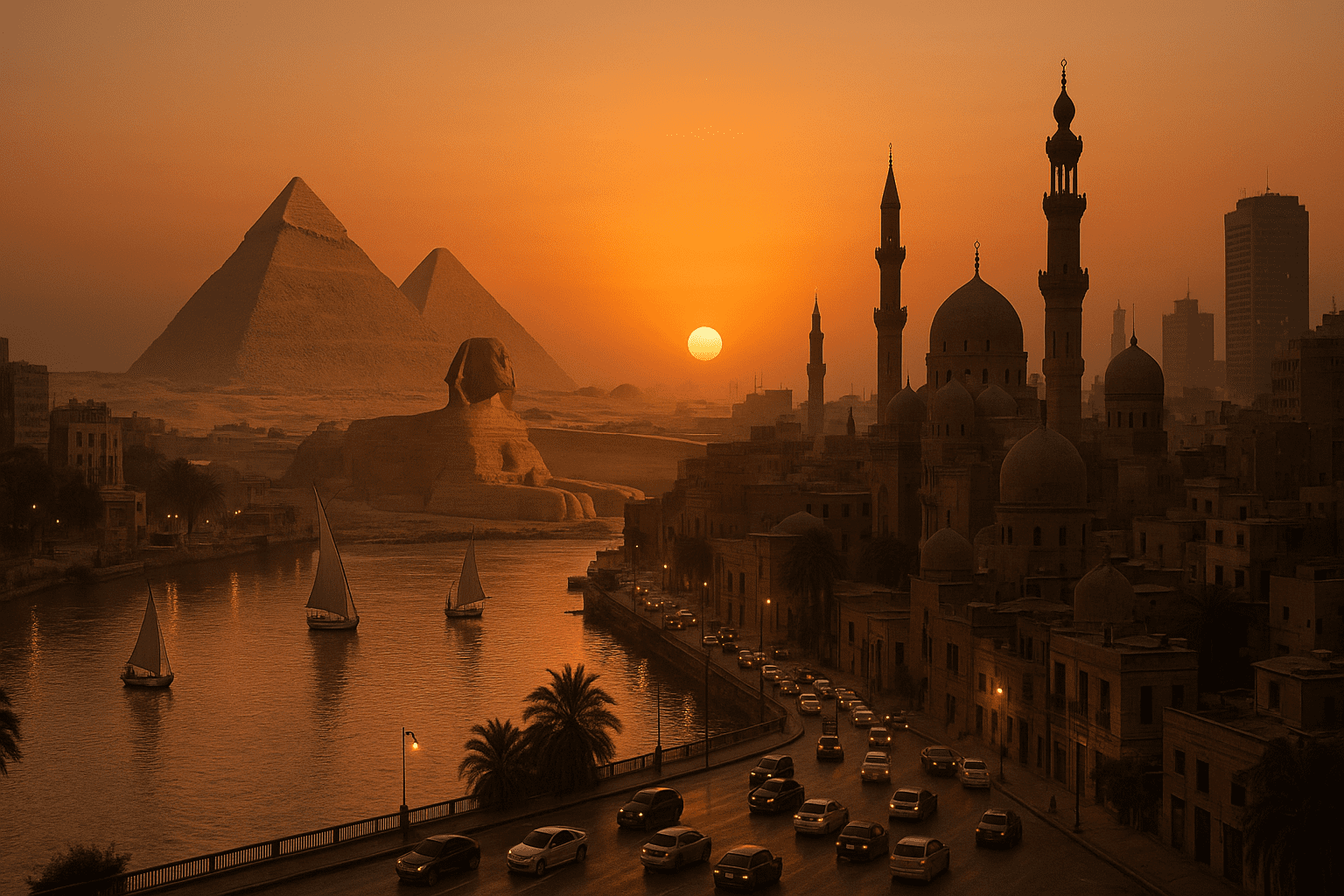
Cairo and Giza together form the core of Egypt’s modern and ancient identity. Known collectively as Greater Cairo, this metropolitan region—spread across both banks of the Nile—is the largest urban center in Africa and the Middle East. Cairo, on the eastern bank, is often called the City of a Thousand Minarets and functions as Egypt’s political and cultural hub. Across the river, Giza serves as the counterpart, home to the world-famous pyramid fields and the historic necropolises of the Old Kingdom.
For over five millennia, the area has hosted successive civilizations—from pharaonic dynasties to the Islamic caliphates—creating a city where medieval lanes coexist with broad European-style boulevards, and where ancient desert edges meet modern suburbs.
Location: Northern Egypt, at the apex of the Nile Delta
Population: Approx. 22 million (Greater Cairo Metro Area, 2024–25)
Language: Arabic (Egyptian dialect); English widely used in tourism and business
Currency: Egyptian Pound (EGP / LE)