The New Home of Kings: Exploring the National Museum of Egyptian Civilization in Fustat
Welcome to a place where time doesn’t just stop; it flows like the Nile itself. The National Museum of Egyptian Civilization (NMEC) is not your typical dusty warehouse of antiquities. It is a vibrant, breathing sanctuary that reimagines how we connect with the past. Located in the historic heart of Fustat, the first Islamic capital of Egypt, this museum offers something truly profound: a continuous narrative of the Egyptian experience, from the dawn of prehistory to the present day. Unlike traditional museums that segregate eras, NMEC weaves them together, showing you that the spirit of Egypt is one unbroken thread. It is polished, modern, and deeply moving—a cultural beacon that invites you to look into the faces of the pharaohs and walk away changed.
A Glimpse into History
Architectural Marvels
As you approach the museum, the first thing that strikes you is its sheer modernity set against an ancient landscape: designed by Egyptian architect El Ghazali Kseiba, with interior exhibition spaces crafted by Japanese architect Arata Isozaki, the structure rises like a massive, sleek prism from the earth, crowned by a pyramid-like glass form that subtly nods to the Giza plateau while remaining unmistakably contemporary. Inside, the spatial experience is breathtaking—you are not trapped in a maze, but instead move through a flooded, light-filled Main Hall where the ceiling soars high above, giving the artifacts room to breathe. Yet the real magic lies beyond the glass walls, where the museum overlooks Ain El Sira Lake, a natural spring that has been beautifully revitalized; standing on the terrace and gazing across the shimmering water toward the citadel in the distance, you feel a rare sense of serenity, a quiet dialogue between the modern stone of the museum and the eternal waters of the lake.
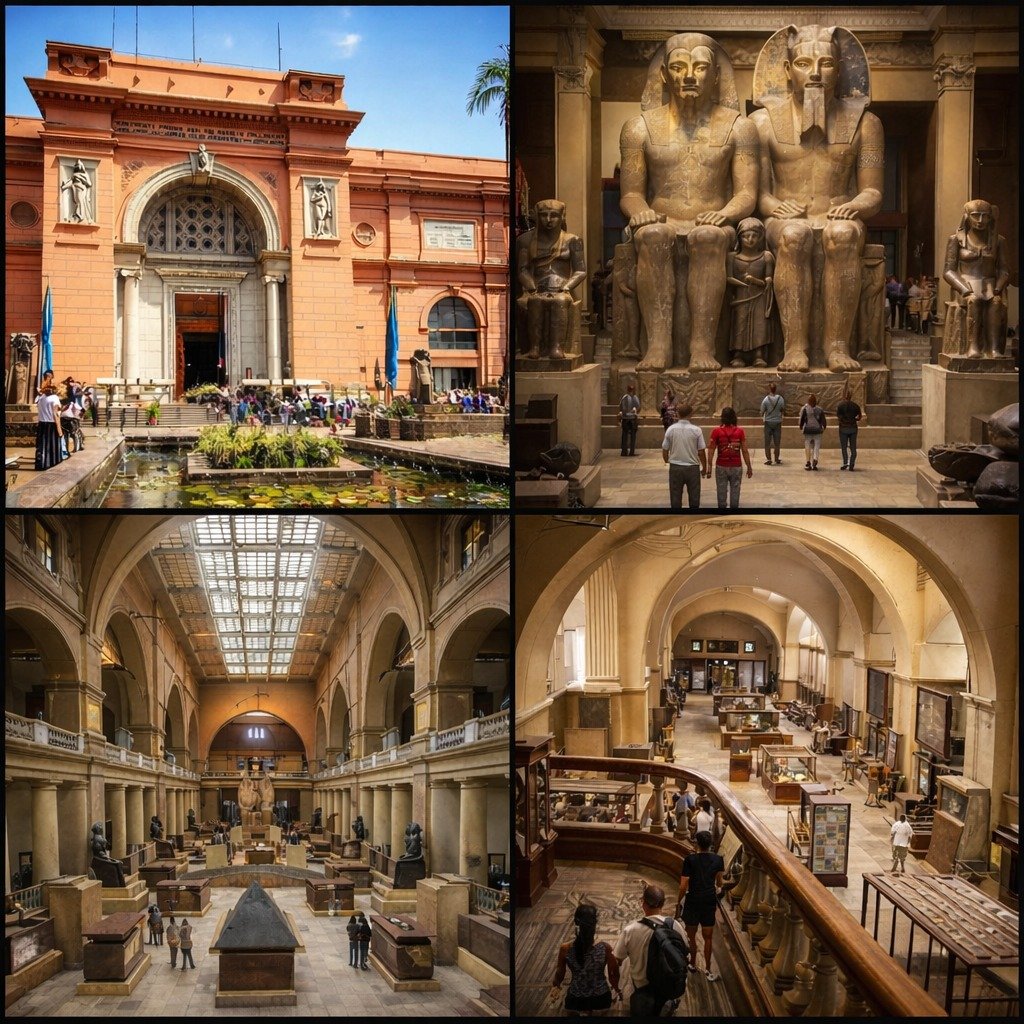
The Collection Highlights
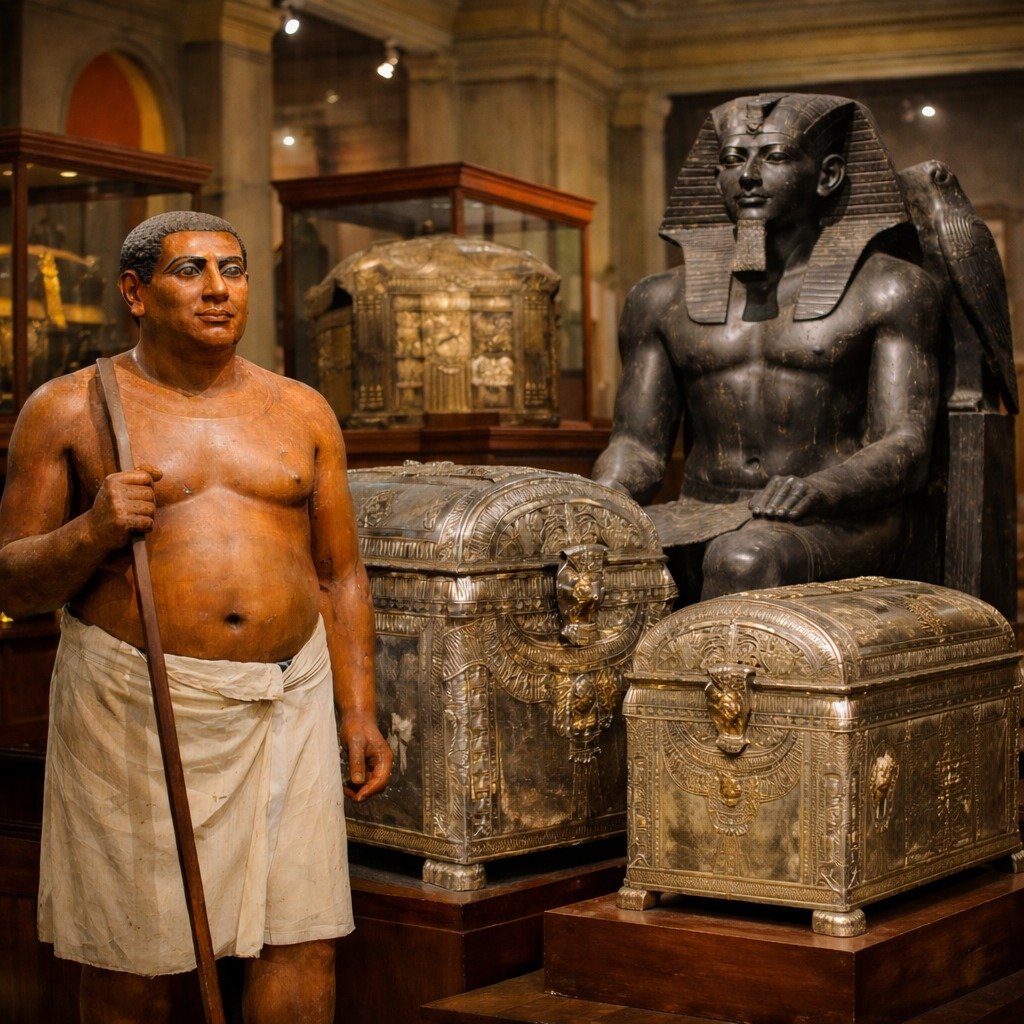
The heart of NMEC lies in its ability to tell stories rather than merely list dates: while the Main Hall carries you on a sweeping chronological journey, its showstoppers are impossible to miss, from the Mahmal—a magnificent embroidered litter once used to carry the sacred Kiswa to Mecca and a powerful symbol of Egypt’s Islamic artistry—to the Chair of Queen Hetepheres, a masterpiece of ancient carpentry whose elegance defies its age. Yet the museum’s undeniable soul is found downstairs in the Royal Mummies Hall, which is not a horror show but a throne room, where dim lighting, black walls, and an atmosphere of reverent silence set the stage for an extraordinary encounter with history; here, you come face-to-face with legends such as Ramses II, Thutmose III, and Hatshepsut, and seeing their hair, their nails, and the set of their jaws becomes an intimate, spine-tingling experience that collapses millennia into a single, unforgettable moment.