The Step Pyramid of Djoser at Saqqara: The Birthplace of Monumental Stone Architecture

Welcome to the birthplace of stone architecture. Before the Great Pyramids of Giza pierced the sky, there was Saqqara, and more specifically, the Step Pyramid of Djoser. This isn’t just another tomb; it is the moment humanity decided to build for eternity. Standing on the edge of the desert plateau, this weathered, terraced monument marks a pivotal shift in history—the transition from mudbrick structures that fade with time to the imperishable limestone monuments that still define Egypt today. If you want to understand the origins of the pyramid age, you must start here, where the architect Imhotep first stacked stone upon stone to create a stairway to the heavens.
A Glimpse into History

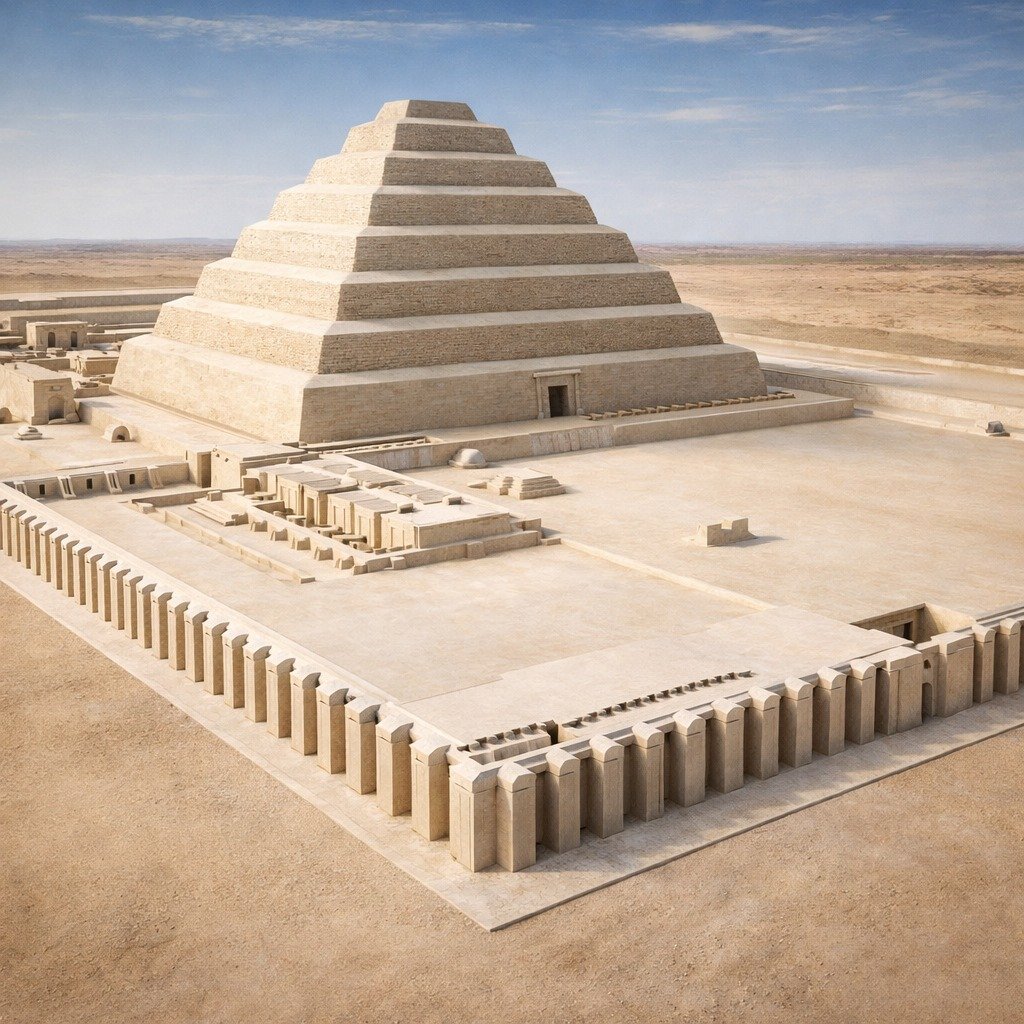
Travel back to the 27th century BC, during the Third Dynasty of the Old Kingdom. Before King Djoser (Netjerikhet), royal tombs were flat, bench-like structures called mastabas, made primarily of mudbrick. Djoser wanted something different—something eternal. He commissioned his vizier, the legendary polymath Imhotep, to oversee a project that would revolutionize engineering. Imhotep didn't just build a tomb; he invented stone architecture on a monumental scale. By stacking six mastabas of decreasing size on top of one another, he created the world's first pyramid. This structure served as the central feature of a vast mortuary complex intended to facilitate the Pharaoh’s afterlife and celebrate his eternal reign.

Architectural Marvels

The Step Pyramid originally stood 62 meters (205 feet) tall, a staggering height for its time, dominating the skyline of Memphis. Unlike the later smooth-sided pyramids, Djoser’s monument rises in six distinct "steps" or tiers. But the pyramid is only the centerpiece; the surrounding complex is equally breathtaking. As you walk through the site, you will notice the gleaming white limestone enclosure wall, which originally featured 14 doors—only one of which was real. Inside, the graceful Hypostyle Hall awaits, with 40 columns carved to resemble bundles of reeds, proving that even as they moved to stone, the Egyptians sought to preserve the organic forms of nature they held dear.
An Unforgettable Story

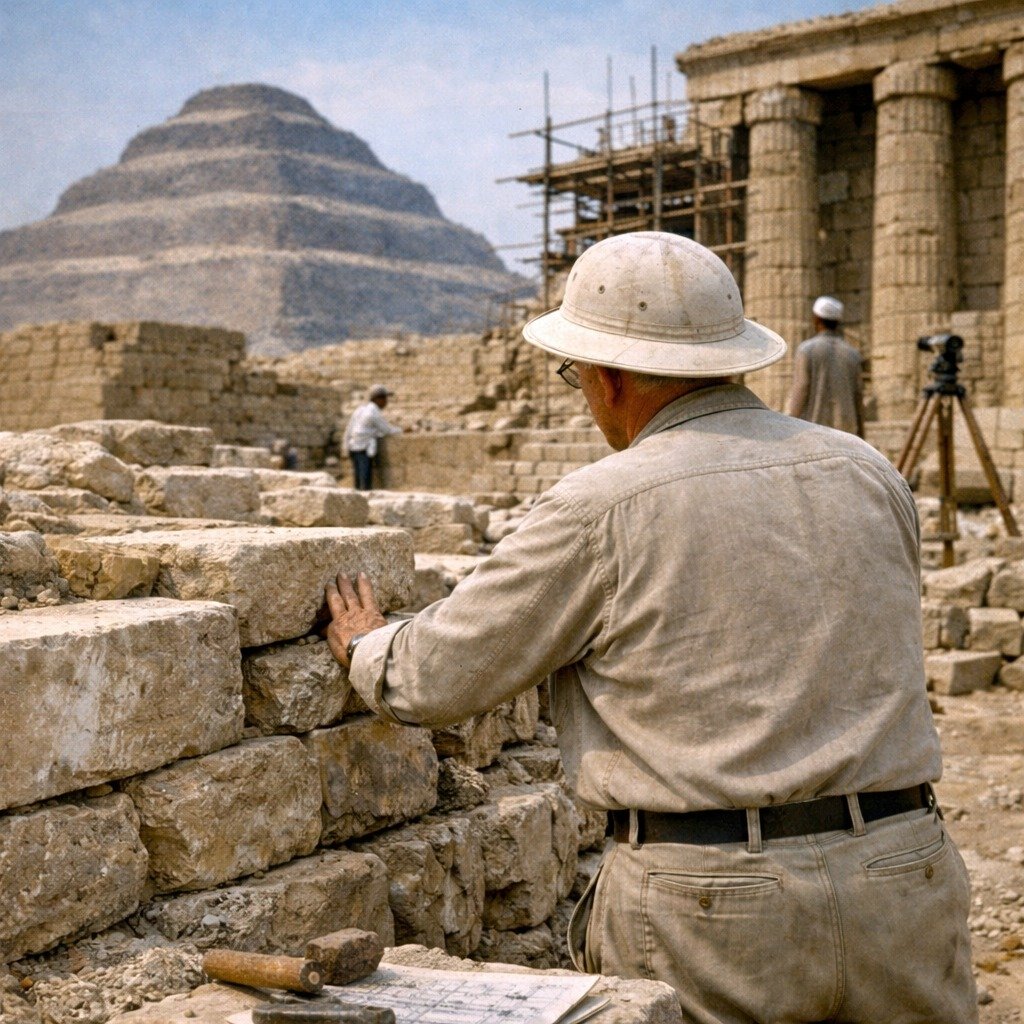
The preservation of this site is largely owed to the dedication of French architect and Egyptologist Jean-Philippe Lauer. Arriving in Egypt in 1926, Lauer intended to stay for only eight months but ended up dedicating over 70 years of his life to excavating and restoring the Saqqara complex. He famously reconstructed the entrance colonnade and the enclosure wall piece by piece, studying the stones like a giant jigsaw puzzle. His lifetime of devotion turned a field of scattered rubble into the coherent, majestic complex visitors walk through today. It is a touching reminder that the history we see is often the result of modern passion meeting ancient ambition.

Mysteries & Secrets

Despite centuries of study, Djoser’s pyramid guards its secrets well. Beneath the millions of tons of stone lies a labyrinth—a vast underground network of tunnels and shafts totaling nearly 6 kilometers in length. Deep inside this subterranean city, archaeologists found over 40,000 stone vessels made of alabaster, granite, and diorite. Strangely, many of these jars were inscribed with the names of Djoser’s ancestors from the First and Second Dynasties, not Djoser himself. Why were they gathered here? Was it an act of piety, a collection of heirlooms, or an attempt to absorb the power of his predecessors? The answer remains buried in the silence of the desert.

Visitor Experience

Your journey begins at the southeast corner of the complex, where you step through the only functioning entrance into the shadowed colonnade. The transition from the bright desert sun to the cool, stone-lined corridor is dramatic. As you emerge into the Great South Court, the sheer scale of the Step Pyramid rises before you. You can walk the Heb-Sed court, where the Pharaoh would have performed ritual races to prove his vitality. Don’t miss the Serdab on the north side of the pyramid—a small stone box with two eye-holes. Peer inside, and you will see a life-sized statue of Djoser gazing back at you, eternally watching the northern stars (the original is in the Cairo Museum, but the replica here captures the haunting purpose of the tomb).

Quick Facts

➤ UNESCO Status: Part of the “Memphis and its Necropolis” World Heritage Site (Inscribed 1979).
➤ Date of Construction: c. 2667–2648 BC (3rd Dynasty).
➤ Architect: Imhotep.
➤ Height: Approximately 60–62 meters (originally).