Inside Khufu’s Pyramid: Journey to the Heart of Giza’s Greatest Monument

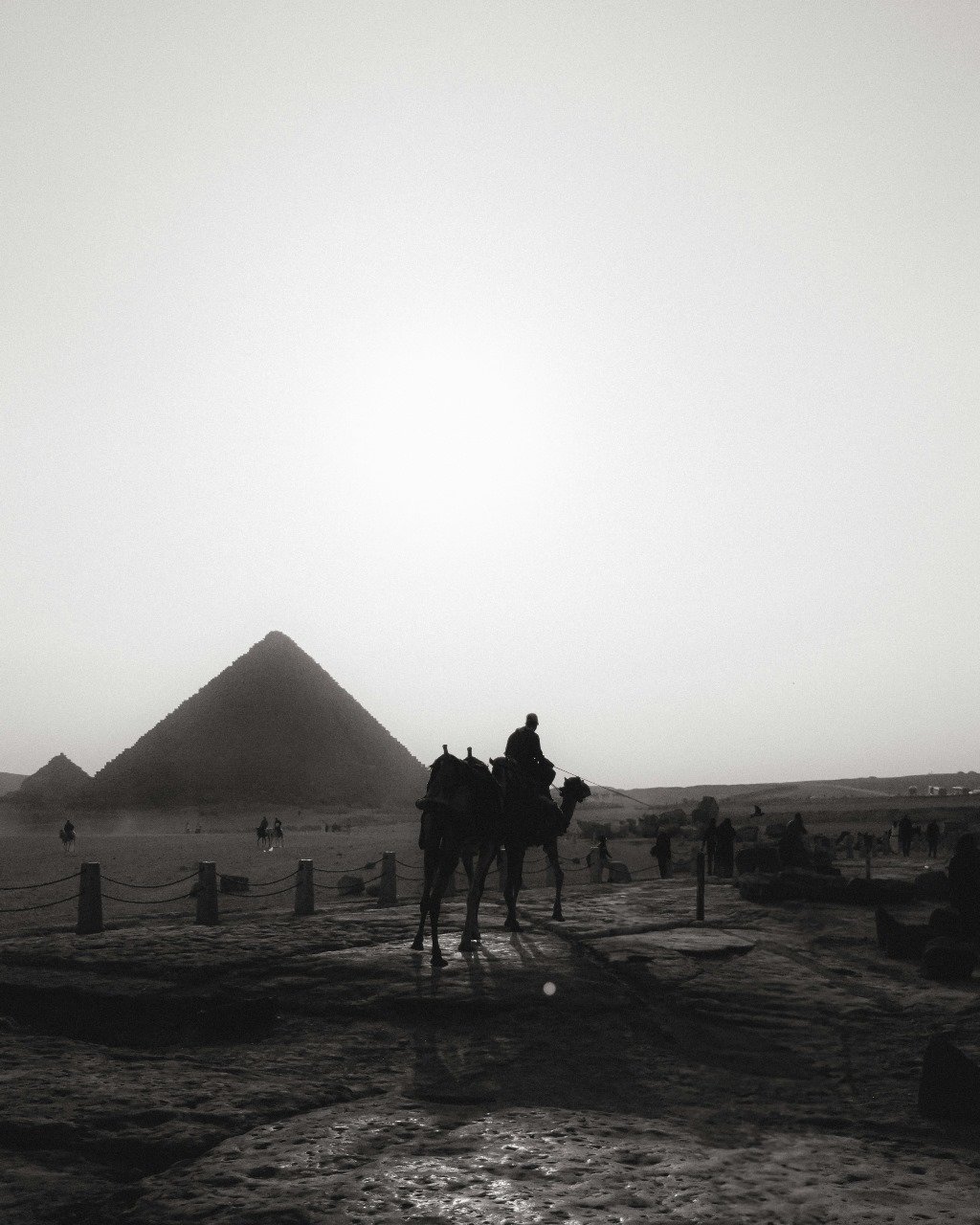
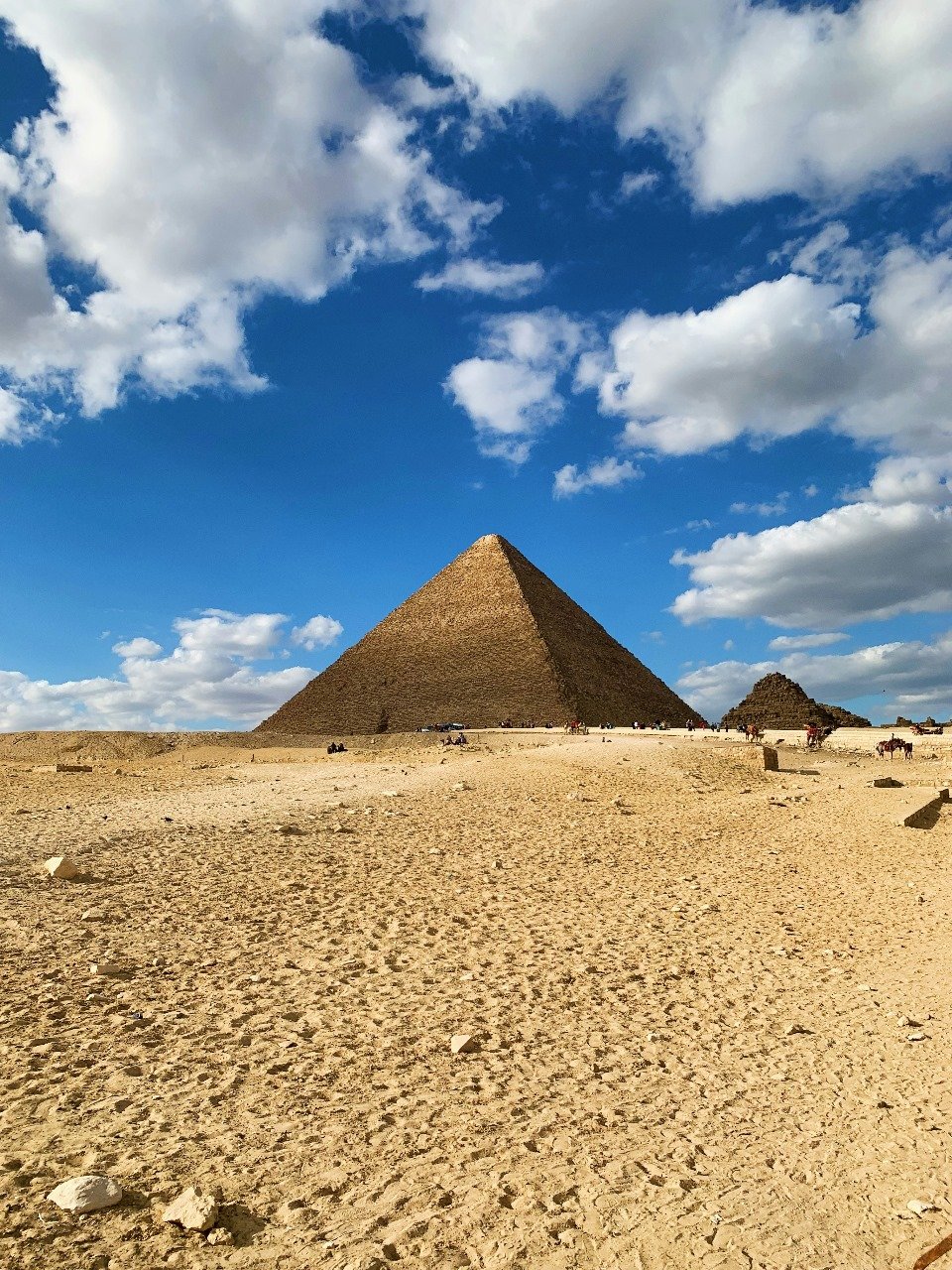
Stand before the Great Pyramid of Khufu, and you are not just looking at a monument—you are gazing at 4,500 years of human history. The last surviving Wonder of the Ancient World, this colossal tomb was built for Pharaoh Khufu, whose ambition reshaped the desert skyline forever. Rising from the legendary Giza Plateau, the Great Pyramid is the largest and most awe-inspiring of the Giza pyramids. It remains a masterpiece of ancient engineering, a labyrinth of hidden chambers, and a timeless testament to Egypt’s Old Kingdom. To visit Khufu’s Pyramid is to walk in the footsteps of pharaohs, explorers, and dreamers—an encounter with eternity itself.
A Glimpse into History

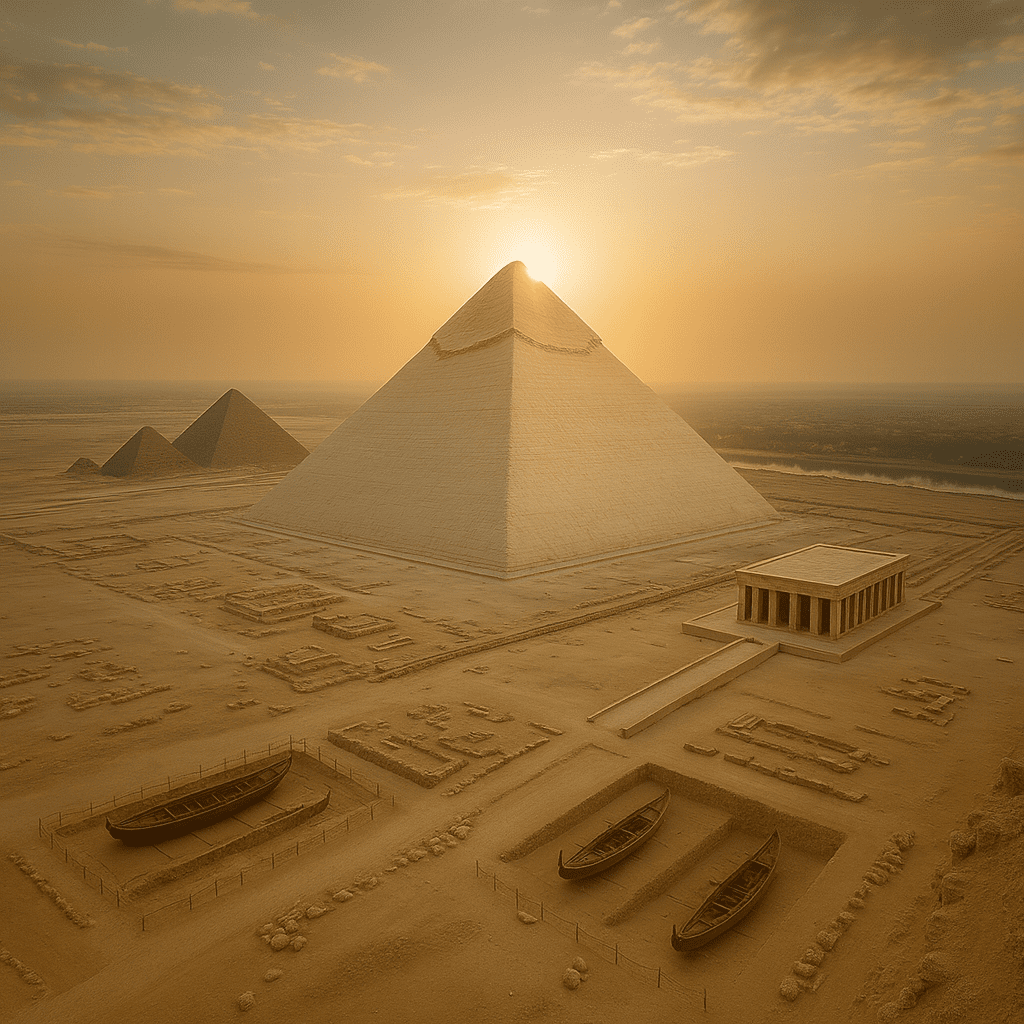
The Great Pyramid of Khufu was born from the vision of Egypt’s 4th Dynasty around 2560 BC, at the height of pyramid construction. It was far more than a single monument—it formed the heart of a vast necropolis, a true “city of the dead.” Khufu’s pyramid was designed as an eternal vessel for the pharaoh’s soul, ensuring his safe passage to the afterlife. The complex once included a grand mortuary temple, a valley temple on the Nile, a long causeway connecting the two, three smaller pyramids for his queens, and deep pits containing magnificent solar boats meant to carry him through the heavens alongside the sun god Ra

Architectural Marvels

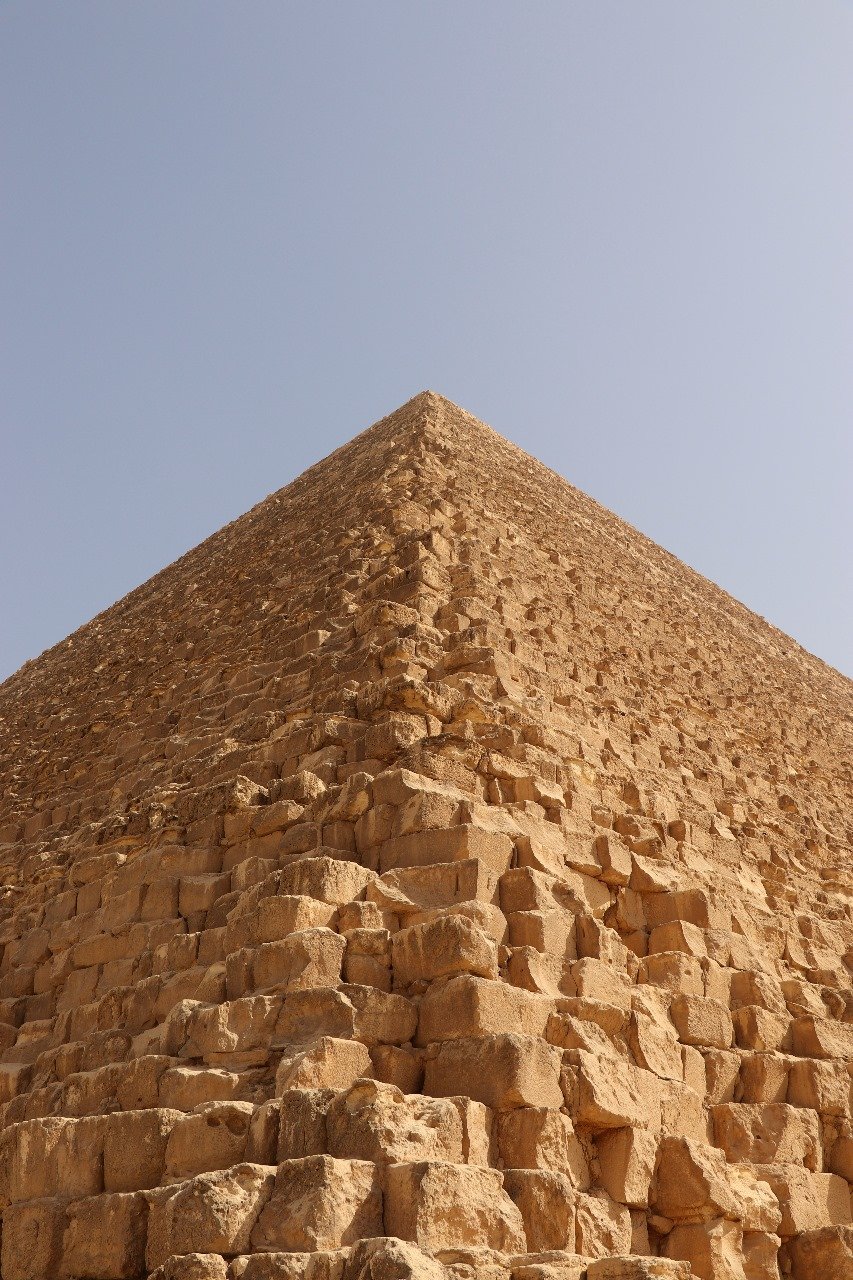
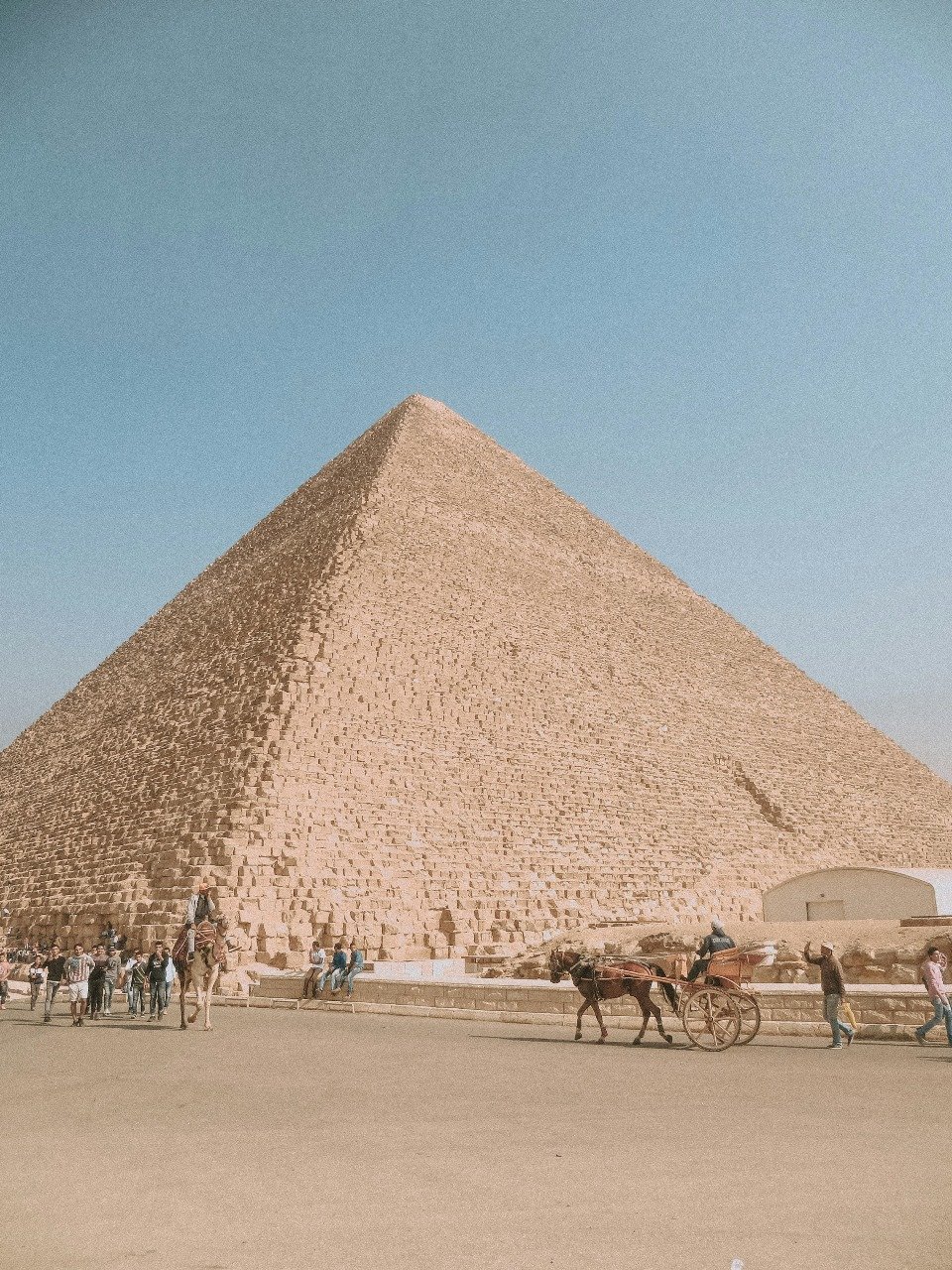
The scale of Khufu’s Great Pyramid is staggering. Built from an estimated 2.3 million limestone and granite blocks, some weighing up to 70 tons, it held the record as the tallest man-made structure on Earth for nearly 3,800 years. Once encased in smooth white Tura limestone that gleamed brilliantly under the Egyptian sun, the pyramid must have been visible for miles. Inside lies a maze of narrow corridors and chambers: a descending passage into the bedrock, an unfinished subterranean chamber, and the mysterious Queen’s Chamber. The Grand Gallery, an astonishing corbelled corridor, rises toward the King’s Chamber—its massive red-granite beams still perfectly aligned after millennia.
Discovery and Research

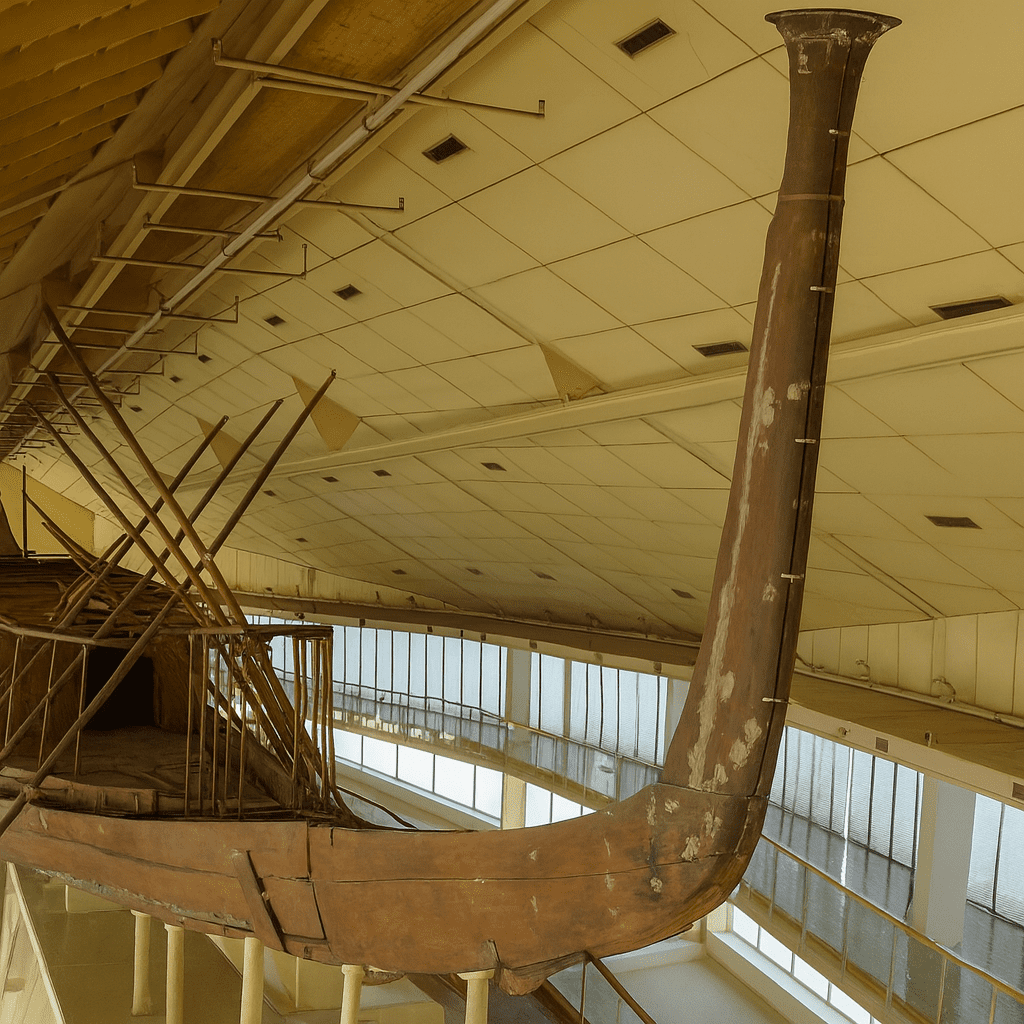
While the Great Pyramid has stood for over four millennia, discoveries continue to reshape our understanding of it. In 1954, archaeologist Kamal el-Mallakh uncovered a sealed pit at the base of the pyramid containing more than 1,200 pieces of a full-sized solar barque, now known as the Khufu Ship. This 143-foot-long cedarwood vessel is an extraordinary example of ancient Egyptian shipbuilding. It has been carefully reassembled and transferred to the Grand Egyptian Museum, where it is undergoing conservation ahead of public display once the museum fully opens. More recently, the ScanPyramids Project—a scientific initiative launched in 2015—has used cosmic-ray muon tomography to peer inside the structure without disturbing it. The team confirmed a previously unknown North-Face Corridor and identified a vast hidden cavity, the so-called Big Void, directly above the Grand Gallery. Its purpose remains unknown, preserving one of Egypt’s most tantalizing mysteries.

Mysteries & Secrets

The Great Pyramid of Khufu has always been a beacon for mystery, inspiring centuries of speculation and study. Even today, modern science reveals that the pyramid has not surrendered all its secrets.

The Scan Pyramids Project uncovered two astonishing discoveries. The first was the North-Face Corridor, a previously unknown passage hidden above the original entrance. The second, even more mysterious, is the Big Void—a vast empty space, at least 30 meters long, located directly above the Grand Gallery. Its purpose remains uncertain. Some experts think it may be a structural feature to relieve pressure; others suggest it could conceal a yet-undiscovered chamber.

These revelations have reignited fascination with the Khufu pyramid, showing that archaeology in Egypt is far from complete. The Great Pyramid remains not only a wonder of the ancient world but also a living scientific frontier, where each discovery deepens the mystery.


Visitor Experience

Visiting the Giza Pyramids is an unforgettable journey through time. As you stand before Khufu’s Pyramid, the immensity of its stonework becomes truly humbling. Walk the entire perimeter to admire its scale and alignment with Khafre’s and Menkaure’s pyramids, and the ever-watchful Great Sphinx nearby.

For the bold, an additional ticket allows entry inside the Great Pyramid itself. The climb is steep and narrow, the air thick with history. You’ll duck through low passages, ascend through the Grand Gallery, and emerge into the King’s Chamber, where Khufu’s empty sarcophagus rests. It’s a physically demanding experience but one that leaves a lasting impression—an intimate communion with the ancient world.


Quick Facts

Official Name: The Great Pyramid of Giza (Pyramid of Khufu)
Location: Giza Plateau, Greater Cairo, Egypt
Builder: Pharaoh Khufu (Fourth Dynasty, Old Kingdom)
Architect (Likely): Hemiunu, Khufu’s vizier
Date of Construction: c. 2560–2540 BC
Materials: Local limestone (core), Tura limestone (casing), red granite (chambers)
UNESCO World Heritage Site: Yes – part of “Memphis and its Necropolis” (inscribed 1979)
Opening Hours: Vary; check on arrival or via official sources