The Pink Palace of Tahrir: Inside Cairo’s Time Capsule
Welcome to the “Grand Old Dame” of Cairo. While modern, glossy museums rise near the pyramids, the Egyptian Museum in Tahrir Square remains the beating heart of Egyptology. This isn’t just a building; it is a chaotic, magnificent treasure chest that feels like an adventure in itself. Since 1902, this salmon-colored palace has guarded one of the world’s greatest collections of Pharaonic antiquities. Visiting here offers a raw, unfiltered connection to history—where you can stand inches from the granite gaze of kings and stumble upon treasures stacked high in glass cases that have stood for a century. It is a place for the romantic traveler who loves the dust, the shadows, and the thrill of discovery.
A Glimpse into History
Architectural Marvels
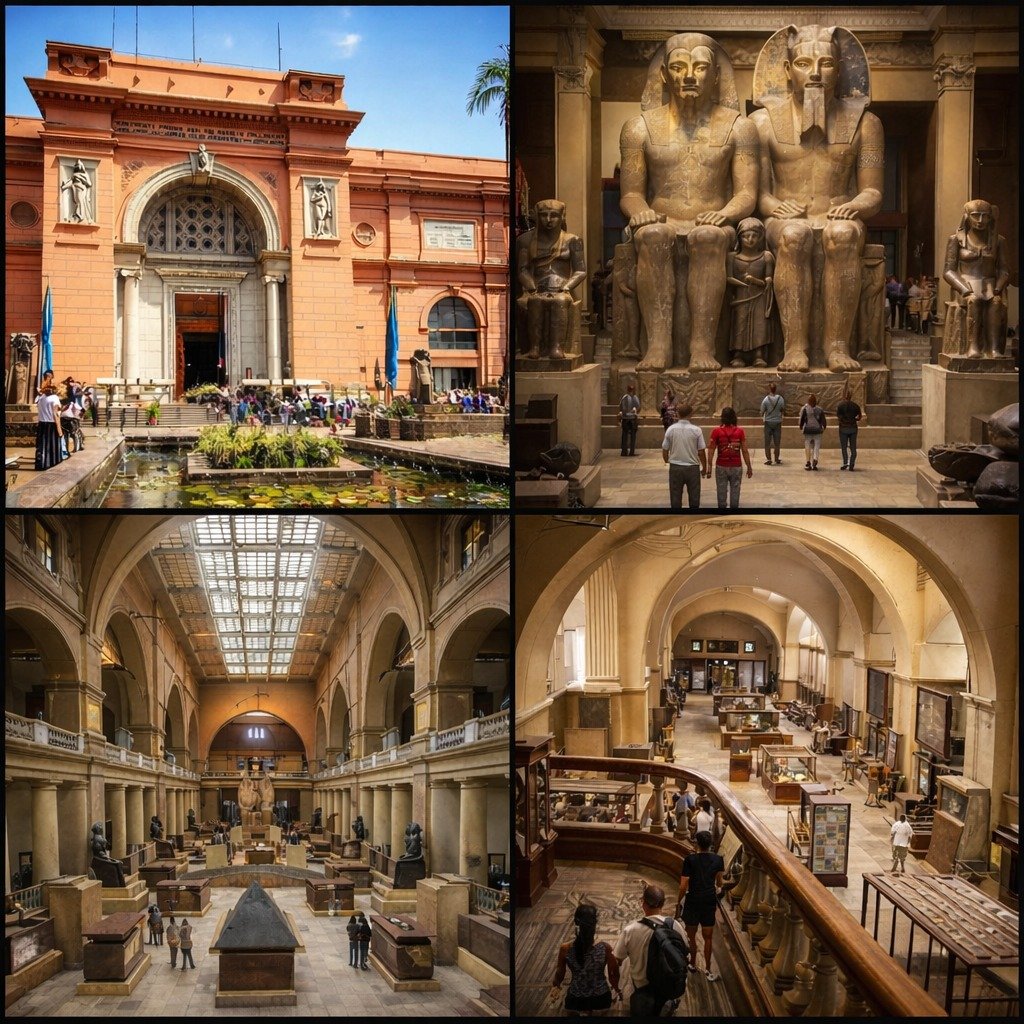
The building itself is a masterpiece of the Beaux-Arts style, designed by French architect Marcel Dourgnon. From the moment you step through the arched entrance, you are transported back to the early 20th century. The interior is vast and cavernous, featuring soaring ceilings and high skylights intended to bathe the statues in natural sunlight—a feature that gives the museum its distinct, shifting atmosphere throughout the day. Unlike modern "black box" museums, this space breathes. The grand atrium, flanked by colossal statues, makes you feel small in the best possible way, while the upper floors, with their creaky wooden floorboards and ornate iron balustrades, evoke the charm of an old library or a forgotten palace.
The Collection Highlights
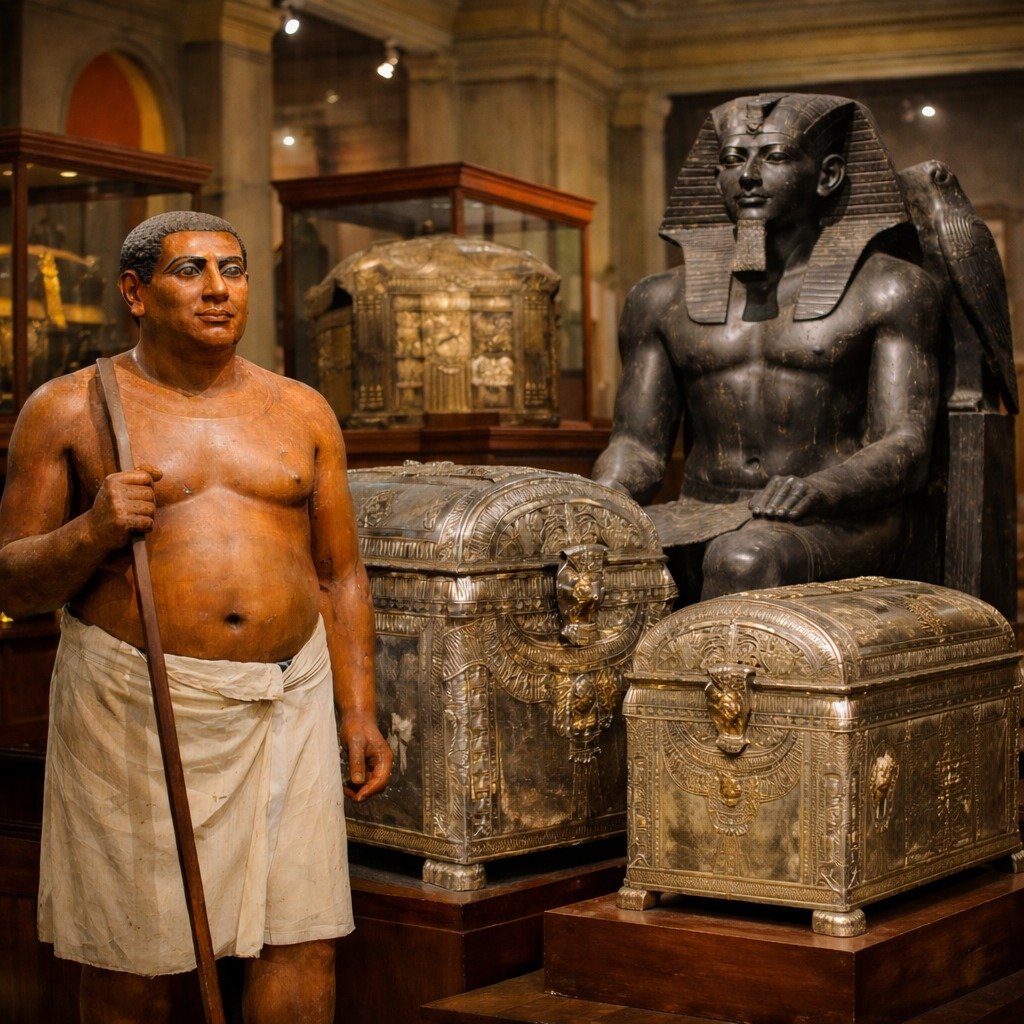
While some celebrated pieces have migrated to newer venues, the Tahrir museum retains an overwhelming wealth of masterpieces that define ancient art. The ground floor is dominated by the heavyweights of the Old Kingdom: the hyper-realistic wooden statue of Ka-aper (Sheikh el-Balad), whose crystal eyes still sparkle with life, and the dark diorite statue of Khafre, protected by the falcon god Horus. Upstairs, the spotlight now shines brightly on the Tanis Treasures, often called the "Silver Pharaohs." Discovered in the Delta—including undisturbed royal burials—this royal hoard includes silver coffins and gold masks that rival Tutankhamun’s in craftsmanship but remain delightfully uncrowded. Do not miss the Yuya and Thuya collection—the dazzling gilded furniture and chariots belonging to the great-grandparents of King Tut, offering an intimate look at non-royal luxury.