The Step Pyramid of Djoser at Saqqara: The Birthplace of Monumental Stone Architecture
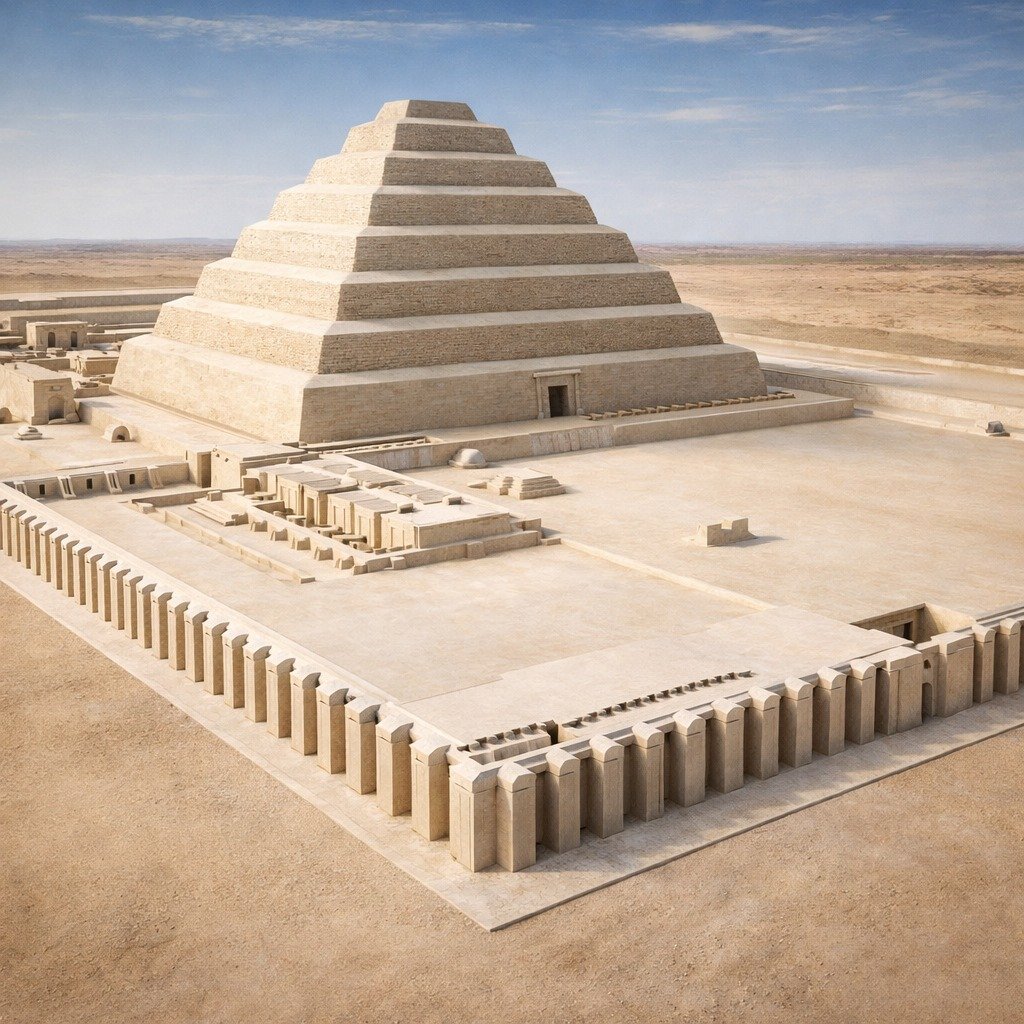
Welcome to the birthplace of stone architecture. Before the Great Pyramids of Giza pierced the sky, there was Saqqara, and more specifically, the Step Pyramid of Djoser. This isn’t just another tomb; it is the moment humanity decided to build for eternity. Standing on the edge of the desert plateau, this weathered, terraced monument marks a pivotal shift in history—the transition from mudbrick structures that fade with time to the imperishable limestone monuments that still define Egypt today. If you want to understand the origins of the pyramid age, you must start here, where the architect Imhotep first stacked stone upon stone to create a stairway to the heavens.
A Glimpse into History
Architectural Marvels
The Step Pyramid originally stood 62 meters (205 feet) tall, a staggering height for its time, dominating the skyline of Memphis. Unlike the later smooth-sided pyramids, Djoser’s monument rises in six distinct "steps" or tiers. But the pyramid is only the centerpiece; the surrounding complex is equally breathtaking. As you walk through the site, you will notice the gleaming white limestone enclosure wall, which originally featured 14 doors—only one of which was real. Inside, the graceful Hypostyle Hall awaits, with 40 columns carved to resemble bundles of reeds, proving that even as they moved to stone, the Egyptians sought to preserve the organic forms of nature they held dear.
An Unforgettable Story
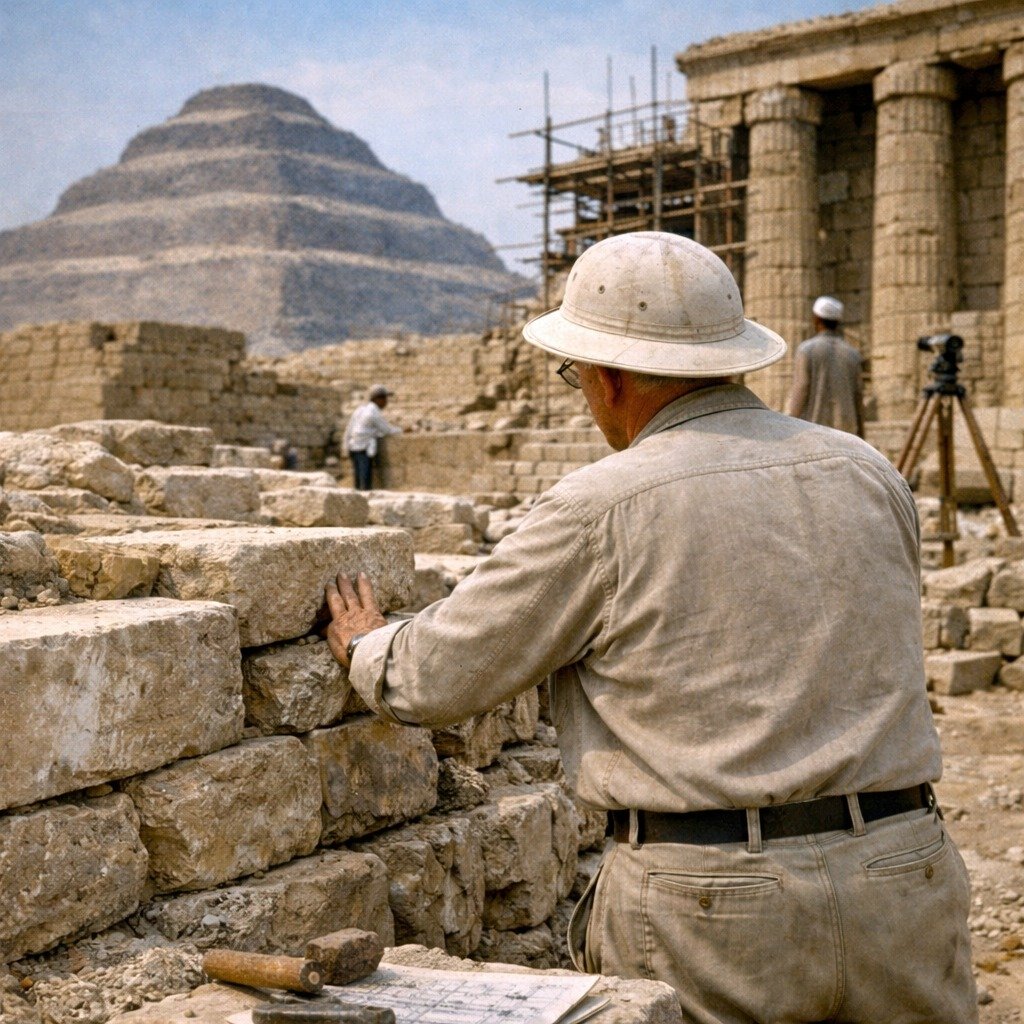
The preservation of this site is largely owed to the dedication of French architect and Egyptologist Jean-Philippe Lauer. Arriving in Egypt in 1926, Lauer intended to stay for only eight months but ended up dedicating over 70 years of his life to excavating and restoring the Saqqara complex. He famously reconstructed the entrance colonnade and the enclosure wall piece by piece, studying the stones like a giant jigsaw puzzle. His lifetime of devotion turned a field of scattered rubble into the coherent, majestic complex visitors walk through today. It is a touching reminder that the history we see is often the result of modern passion meeting ancient ambition.