Pyramid of Unas: The First Pyramid Texts Carved in Stone
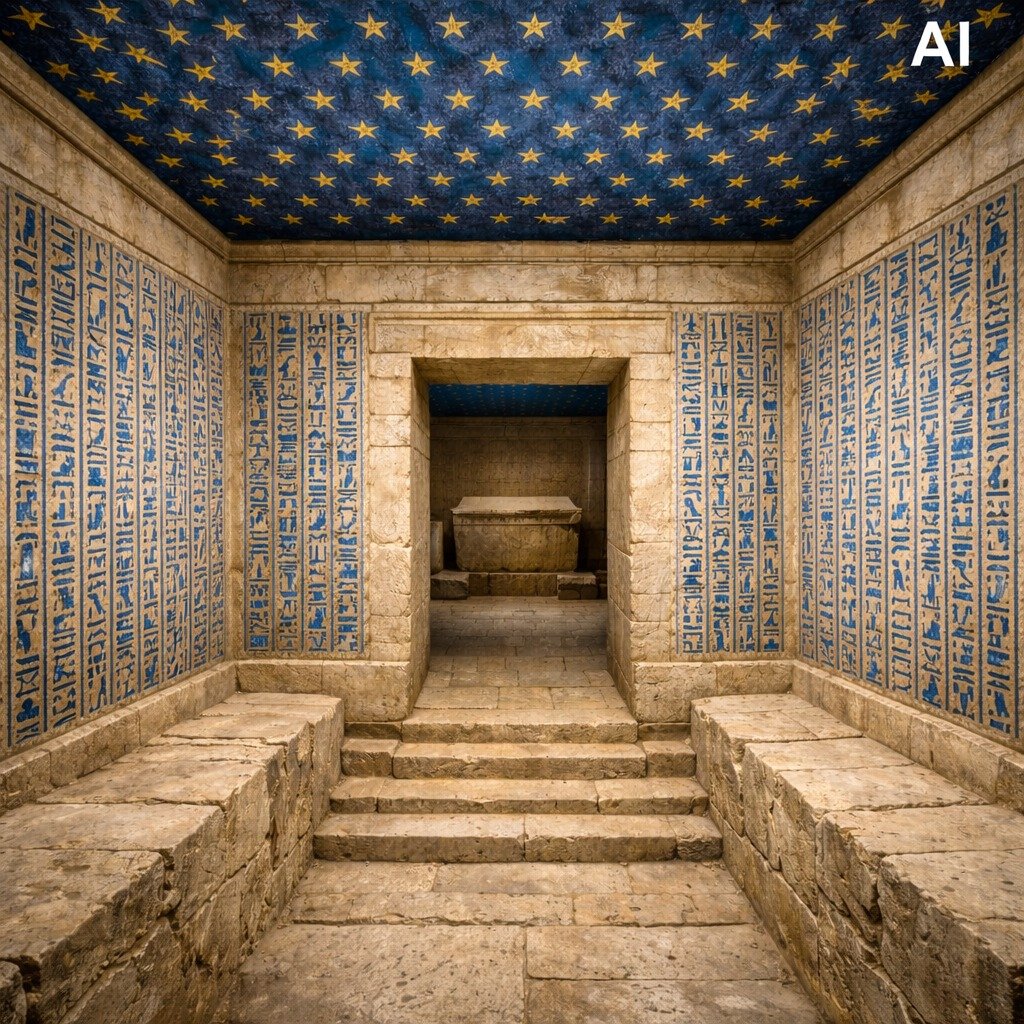
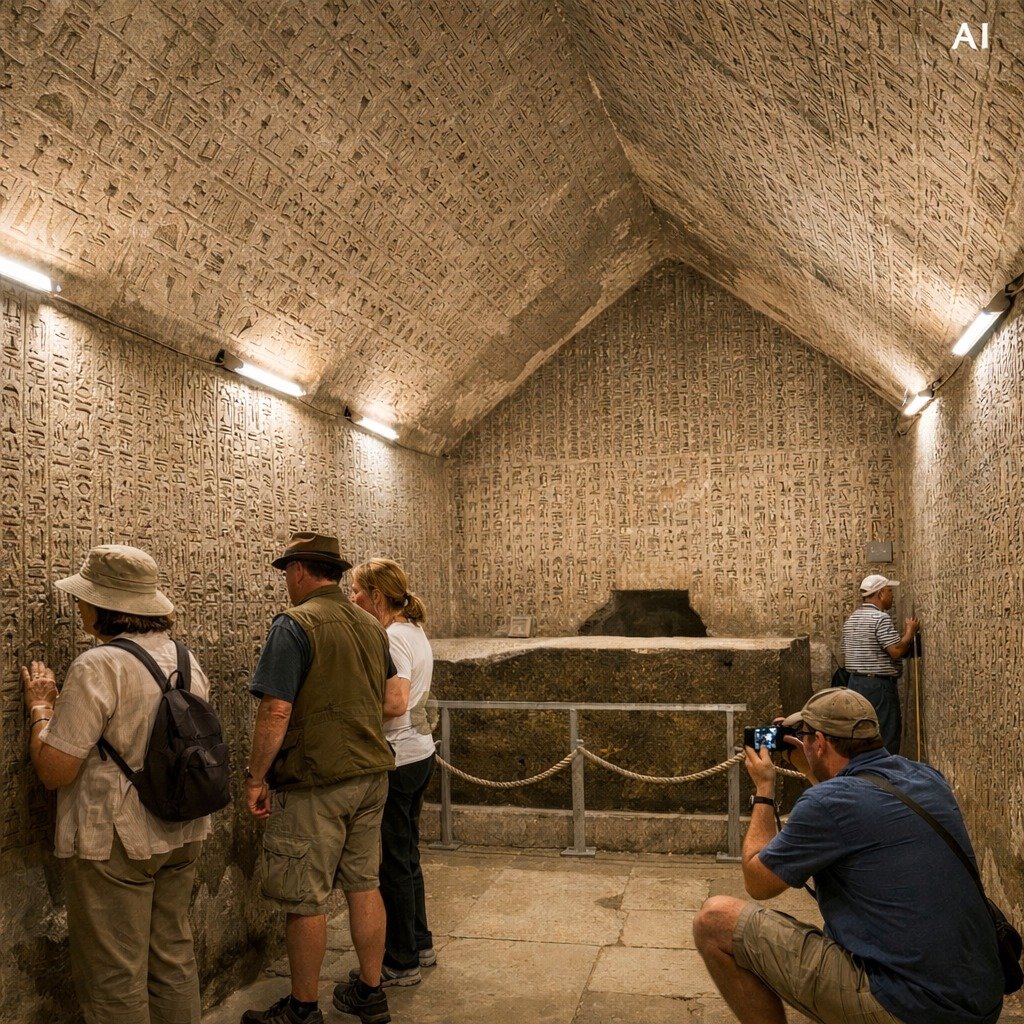
At first glance, the Pyramid of Unas barely registers against the Saqqara desert—a low mound of broken stone, stripped of its casing and humbled by time. Yet this unassuming exterior conceals one of the most extraordinary interiors in all of Egypt. Inside lies the world’s oldest known religious writings: the Pyramid Texts. Stepping into Unas’s burial chamber is like entering a sacred manuscript carved entirely in stone, where blue hieroglyphs glow against pale limestone beneath a star-filled ceiling.
A Glimpse into History
Architectural Marvels
While the exterior masonry has largely collapsed, the interior remains astonishingly intact. A descending passage leads to an antechamber and burial chamber lined with fine white limestone. Every wall is densely carved with vertical columns of hieroglyphs, originally filled with Egyptian Blue pigment. Above, the ceiling is painted deep blue and studded with golden five-pointed stars—an eternal night sky through which the king would ascend.
Discovery and Research
In 1881, Gaston Maspero entered the pyramid and uncovered the Pyramid Texts, fundamentally transforming Egyptology. These inscriptions revealed the earliest structured religious system in human history. Conservation efforts completed in 2016 stabilized the interior environment, preserving the texts and allowing visitors to experience them safely.