Asia
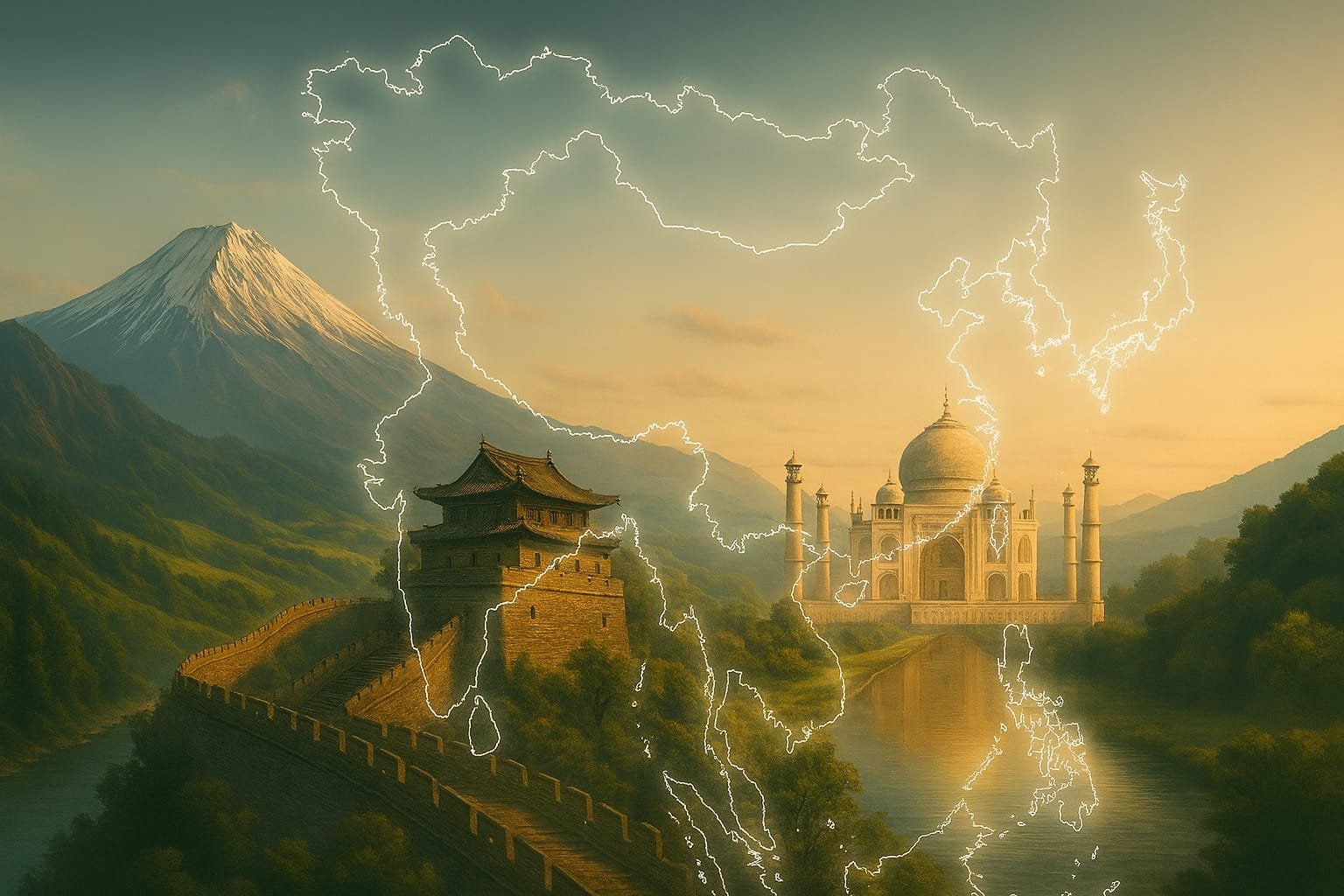
Asia Travel Guide: Explore Culture, Cuisine & Wonders of the World’s Largest Continent
Asia is the world’s largest and most populous continent—a vast, kaleidoscopic landmass that spans from the frozen Arctic tundra to tropical rainforests and desert plains. Covering approximately 44.58 million square kilometers, it accounts for nearly 30% of Earth’s total land area and is home to over 4.7 billion people, about 60% of the global population, across 48 UN-recognized countries.
Asia stretches across the Eastern and Northern Hemispheres, bordered by the Arctic Ocean to the north, the Pacific Ocean to the east, and the Indian Ocean to the south. Its western boundary with Europe is defined more by culture and history than by geography—traced along the Ural Mountains, Caspian Sea, and Black Sea.
As the cradle of the world’s earliest civilizations—from Mesopotamia and the Indus Valley to Ancient China—Asia is also the birthplace of all major world religions and has served as a crossroads of human history, trade, and innovation for thousands of years.
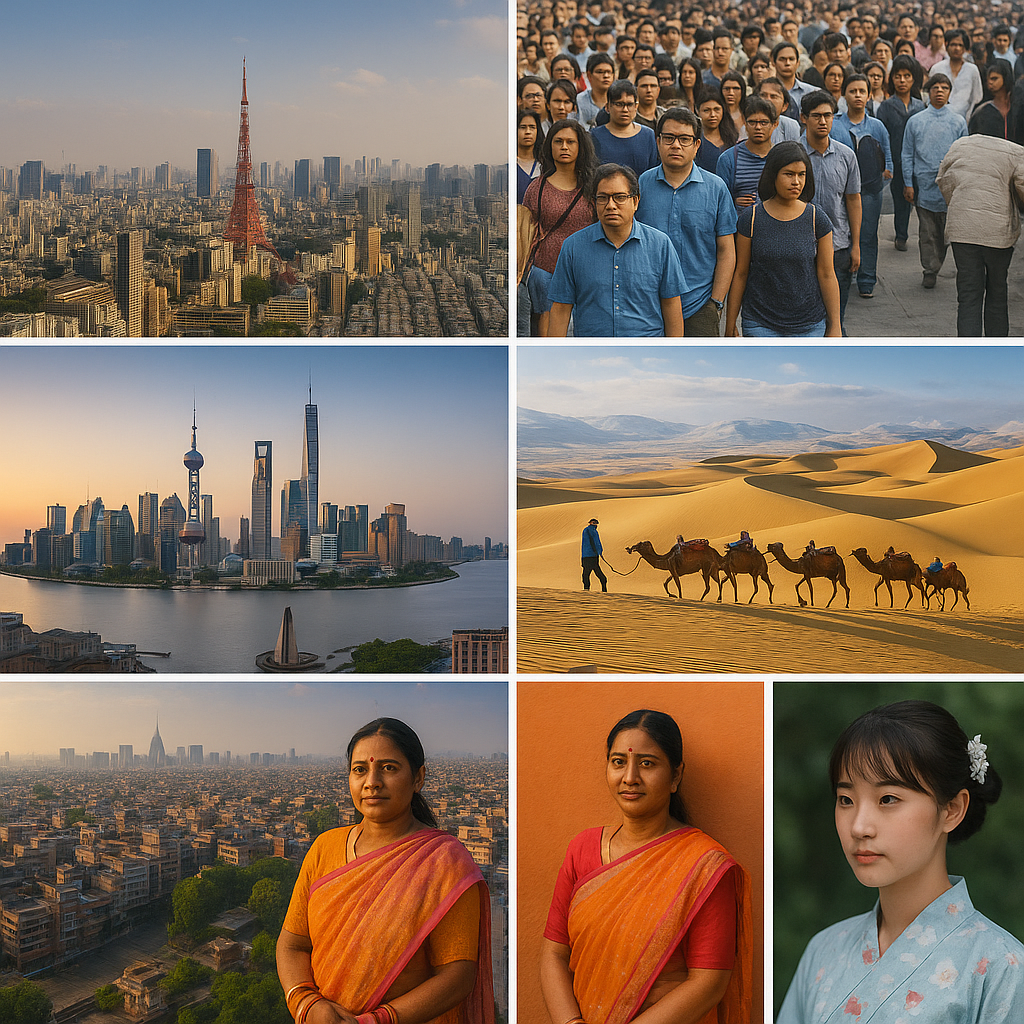
Population and Societies image
population is a study in contrasts. It includes some of the most densely populated regions on Earth—such as East Asia (China, Japan, South Korea) and South Asia (India, Bangladesh, Pakistan)—as well as vast, sparsely inhabited landscapes like the Siberian wilderness, Gobi Desert, and Arabian Peninsula. The continent hosts many of the world’s largest and most dynamic megacities, including Tokyo, Delhi, Shanghai, Mumbai, and Beijing, all global centers of commerce and culture. Ethnic and linguistic diversity is unparalleled, encompassing thousands of groups and languages from major families such as Sino-Tibetan, Indo-European, Austronesian, Dravidian, Turkic, and Afro-Asiatic
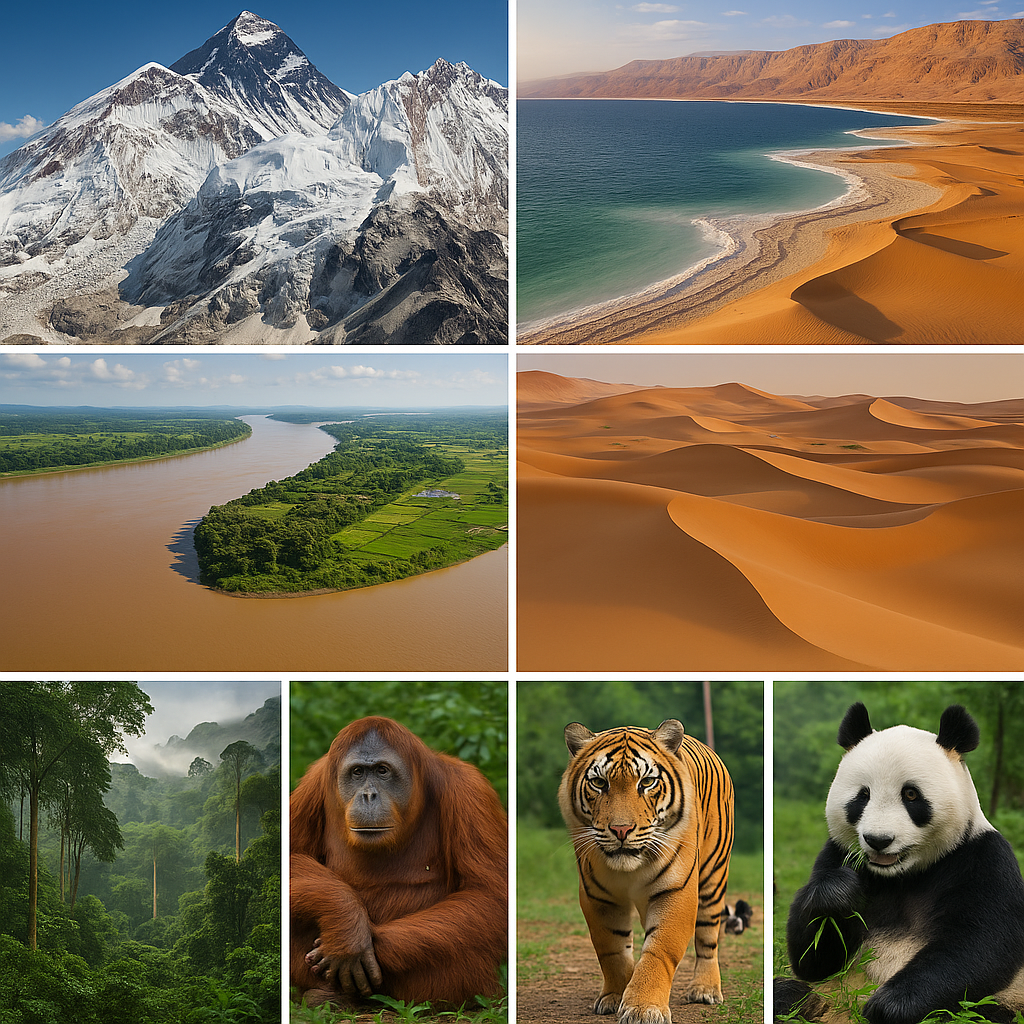
Geography and Ecosystems
Asia’s geography is a showcase of natural extremes. It contains Mount Everest (8,849 m), the world’s highest point, and the Dead Sea, the planet’s lowest land elevation. Mighty river systems such as the Yangtze (6,300 km) and the Ganges-Brahmaputra Delta sustain billions of lives and form the backbone of agriculture and civilization. The continent’s landscapes range from the icy Siberian Taiga and Himalayan highlands to the Arabian and Gobi Deserts. In contrast, Southeast Asia’s tropical rainforests teem with biodiversity, home to species such as orangutans, tigers, Asian elephants, and giant pandas
Traditional Cuisine
Asian cuisine is as diverse as its geography.
In East Asia, balance and simplicity define dishes such as Sushi (Japan), Dim Sum (China), and Kimchi (Korea), flavored with soy sauce, ginger, and sesame oil.
Southeast Asia (Thailand, Vietnam, Indonesia) offers bright, aromatic fare where chili, lime, and lemongrass meet in dishes like Pad Thai and Pho.
In South Asia, bold spice blends create iconic curries, dal, and naan, while West Asian cuisine features Kebabs, Hummus, and fragrant rice dishes, rooted in olive oil, chickpeas, and lamb.
Economic Features
Asia’s economy is a powerhouse of both tradition and innovation. It hosts the world’s second-largest economy, China, and advanced industrial nations like Japan, South Korea, and Singapore. Emerging giants such as India and Indonesia are reshaping global trade, while resource-rich countries in the Middle East drive the energy sector through vast oil and gas reserves. Known as the “world’s factory,” Asia leads in technology, manufacturing, and agriculture—producing most of the world’s rice and wheat and serving as a hub of global supply chains.

UNESCO World Heritage Sites
Asia boasts 268 UNESCO World Heritage Sites, a testament to its extraordinary legacy. Highlights include:
The Great Wall of China – an ancient marvel of engineering
The Taj Mahal (India) – a masterpiece of Mughal art
Angkor Wat (Cambodia) – the spiritual heart of the Khmer Empire
Borobudur (Indonesia) – the world’s largest Buddhist monument
These sites embody the continent’s fusion of history, architecture, and natural beauty.
Quick Facts
Number of Countries: 48 (UN members)
Total Population: ~4.75 billion (as of 2024)
Longest River: Yangtze River (China) – 6,300 km
Highest Mountain: Mount Everest (Nepal/China) – 8,849 m
Largest Desert: Arabian Desert – 2.33 million km²
World Heritage Sites: 268 (on the continent)
Annual Tourist Arrivals: Over 319 million (Asia-Pacific, 2023)